
Editorial by David Landriault
Exclusive: Mayor Brown, Port Documents Confirm Federal Study of Pelican Island “Land Bridge” Under Consideration
Local leaders urge evaluation of alternative as Galveston weighs infrastructure decision tied to Gulf Coast shipbuilding and maritime expansion.
A quiet but potentially landmark shift is underway in how Galveston thinks about its future. In an exclusive interview with The 1839, Mayor Dr. Craig Brown confirmed that local officials are actively exploring a federal feasibility study for a “land bridge” alternative to the Pelican Island Bridge — a decision that could reshape the Gulf Coast’s maritime economy for generations.
Update
UPDATE — March 12, 2026
The Pelican Island conversation just shifted. On Tuesday, the Wharves Board of Trustees voted unanimously to authorize Port Director Rodger Rees to submit a letter to the Assistant Secretary of the Army requesting federal authorization for a feasibility study under Section 203 of the Water Resources Development Act. The study would examine whether a land bridge — essentially a levee or dike structure with railroad tracks and potentially a vehicle road on top — could replace or supplement TxDOT’s planned high-span vehicle bridge.
The case made to trustees was specific and economic. Ryan Malcolm, presiding officer of the Galveston and Texas City Pilots, told the board that strong currents in the harbor channel currently limit ship traffic to six- to eight-hour windows per day. A land bridge closing the open water flow at the head of the channel could make port operations round-the-clock. Chris Frabotta, a former Army Corps of Engineers engineer now with Texas International Terminals, argued the structure could also dramatically reduce sediment buildup — potentially saving as much as $30 million annually in dredging costs — while enabling rail access to Pelican Island for the first time.
That rail point matters. The absence of lower-cost freight transportation has long constrained industrial development on the island, where the Port of Houston owns roughly 1,200 acres of undeveloped land.
Trustees and port officials were clear: this does not halt TxDOT’s replacement bridge project, which continues on its own timeline. The feasibility study would run in parallel, giving decision-makers two options to evaluate rather than one. As resident Joe Rosser told the board, the existing bridge funding can’t be put at risk — but the question of whether Galveston is thinking big enough about Pelican Island’s future deserves a serious answer.
The vote was 6-0.
An 1839 Editorial: March 5, 2026
The Land Bridge That Could Define Galveston
Local leaders urge evaluation of alternative as Galveston weighs infrastructure decision tied to Gulf Coast shipbuilding and maritime expansion
A potentially transformative shift in one of the most consequential infrastructure decisions facing the Texas Gulf Coast is now under active consideration.
In an exclusive interview with The 1839, Galveston Mayor Dr. Craig Brown confirmed that local officials are discussing whether to pursue a federal feasibility study examining a “land bridge” alternative to the long-planned replacement of the Pelican Island Bridge.
Documents prepared for the Port of Galveston’s Wharves Board and reviewed by The 1839 show that trustees are expected to discuss whether the port should seek authorization to begin the federal study through the U.S. Army Corps of Engineers.
The study would examine whether a causeway-style land bridge could serve as an alternative to the elevated bridge design currently being advanced by the Texas Department of Transportation.
The Port of Galveston is one of several entities that could potentially sponsor the study, which would be conducted under Section 203 of the federal Water Resources Development Act.
The concept has gained attention among local leaders and maritime stakeholders as Pelican Island’s economic importance continues to grow.
Among those who have repeatedly advocated for evaluating the idea is mayoral candidate and former city council member John Paul Listowski, who has argued that Galveston should examine whether a land bridge and rail connectivity to Pelican Island could reduce long-term infrastructure costs while expanding the island’s transportation and industrial capacity.
“I’ve been advocating for this idea to be studied for a long time, and now is the time to do it,” Listowski said. “Pelican Island’s full economic potential depends on rail access. To make that possible, we have to seriously evaluate options like a land bridge or a lower bridge design that can accommodate rail.”
Port officials and representatives of local maritime businesses have also encouraged exploring the concept as the island emerges as a center of maritime and industrial activity.
A Decision with Regional and National Implications
While the Pelican Island crossing is often discussed as a local transportation issue, the decision carries implications far beyond Galveston.
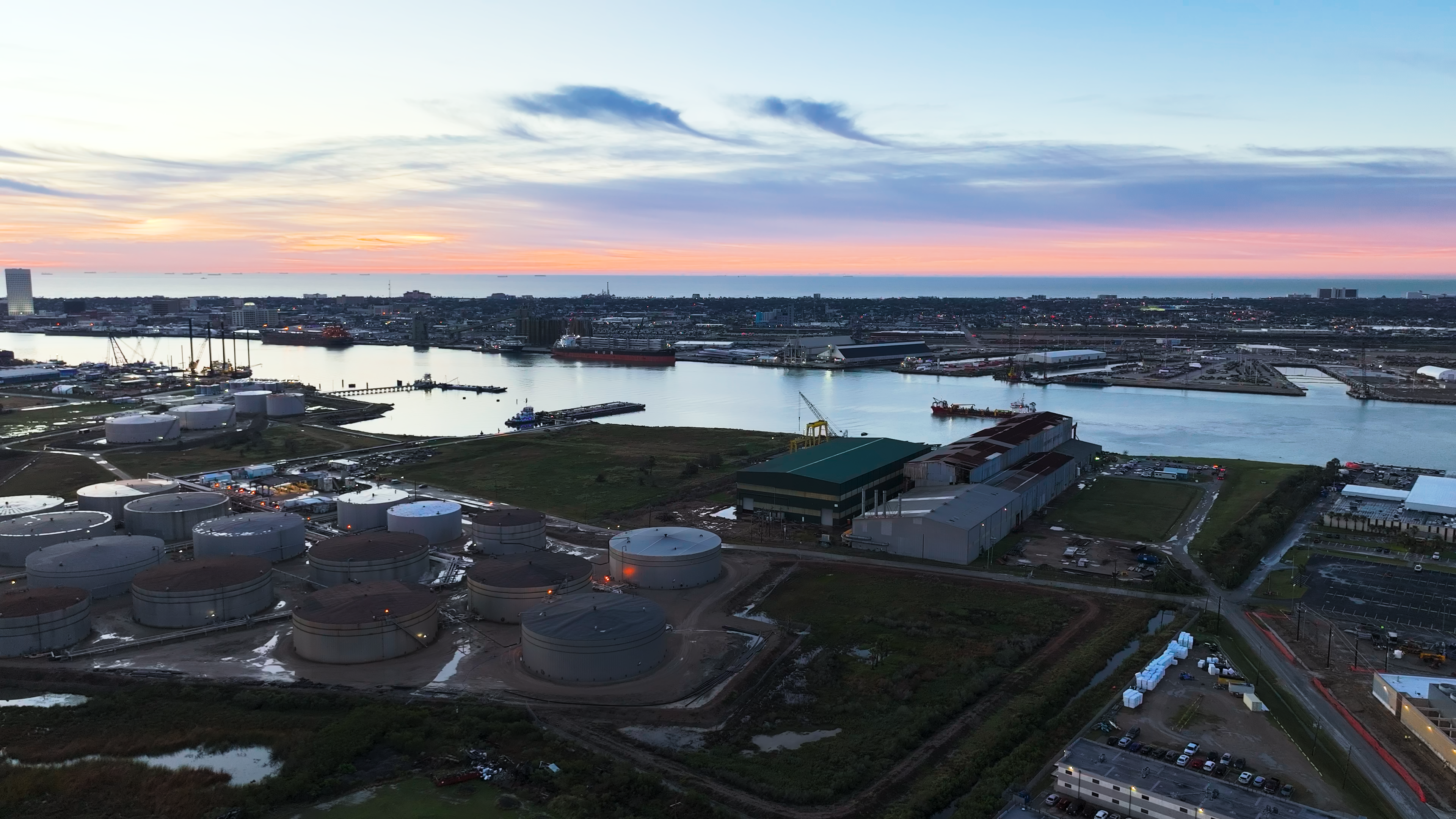
Pelican Island sits at the intersection of several powerful economic forces reshaping the Gulf Coast, including the expansion of American shipbuilding capacity, the growth of maritime logistics tied to Gulf energy exports, and increasing federal investment in domestic maritime infrastructure.
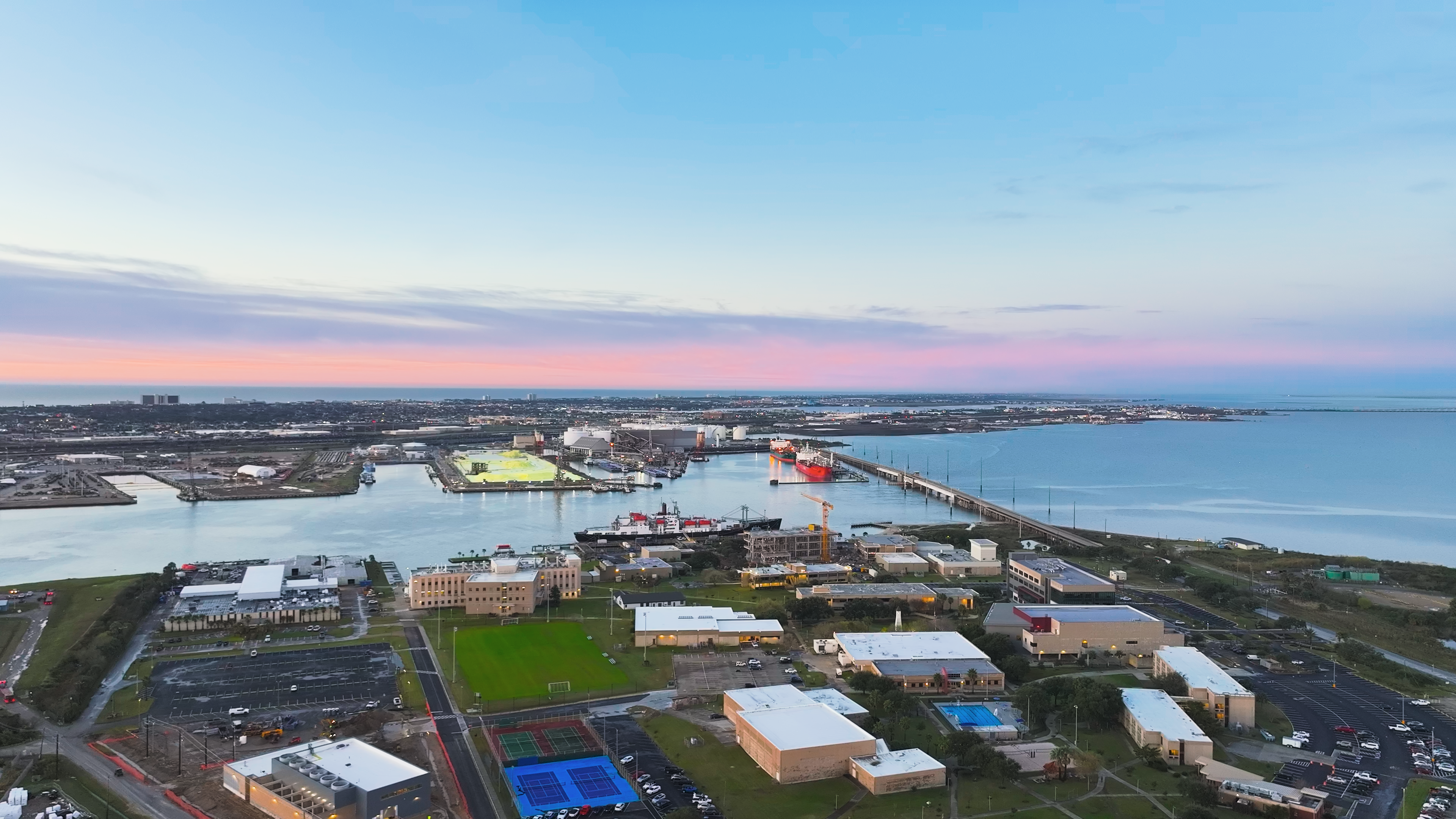
The island already hosts Texas A&M University at Galveston, one of the nation’s leading maritime research and training institutions.
It is also the planned location of the Davie Defense shipbuilding expansion, a project expected to create thousands of high-wage jobs and strengthen the domestic shipbuilding industry.
Reliable access between Galveston Island and Pelican Island is essential to all of it.
That means the crossing between the islands is more than a bridge.
It is the infrastructure backbone of a rapidly evolving maritime and industrial corridor on the Gulf Coast.
Mayor Confirms Federal Study Discussion
During the interview, Brown confirmed that discussions are underway regarding whether a local entity should sponsor the federal feasibility review required to study the land bridge concept.
“There has to be an entity to sponsor the land bridge approach,” Brown said.
“Right now it looks like the Port of Galveston is considering being that entity.”
However, Brown emphasized that the Port is not the only organization that could initiate the study.
Other possible sponsors could include regional port authorities, navigation districts, or private maritime stakeholders involved in harbor infrastructure.
The Wharves Board is expected to discuss whether the Port should pursue that role.
If approved, the Port Director could submit a request to the federal government seeking authorization to begin the feasibility study process.
The action under consideration would not approve construction of a land bridge.
Instead, it would initiate the engineering and environmental review required to determine whether the concept is technically, environmentally, and economically viable.
Until that study occurs, the land bridge remains a concept rather than an evaluated infrastructure alternative.
The City’s Current Position
Brown also emphasized that the City of Galveston remains focused on the bridge replacement project it has been working on with the Texas Department of Transportation for years.
“The City of Galveston has been partnering with TxDOT for years on the elevated bridge replacement project,” Brown said.
“Our focus is to continue moving forward with the plans that we have been working on together.”
TxDOT is responsible for the design, engineering, and construction of the replacement bridge.
The Current Bridge Plan
For nearly a decade, Galveston has been working with the Texas Department of Transportation on a replacement bridge connecting Galveston Island and Pelican Island.
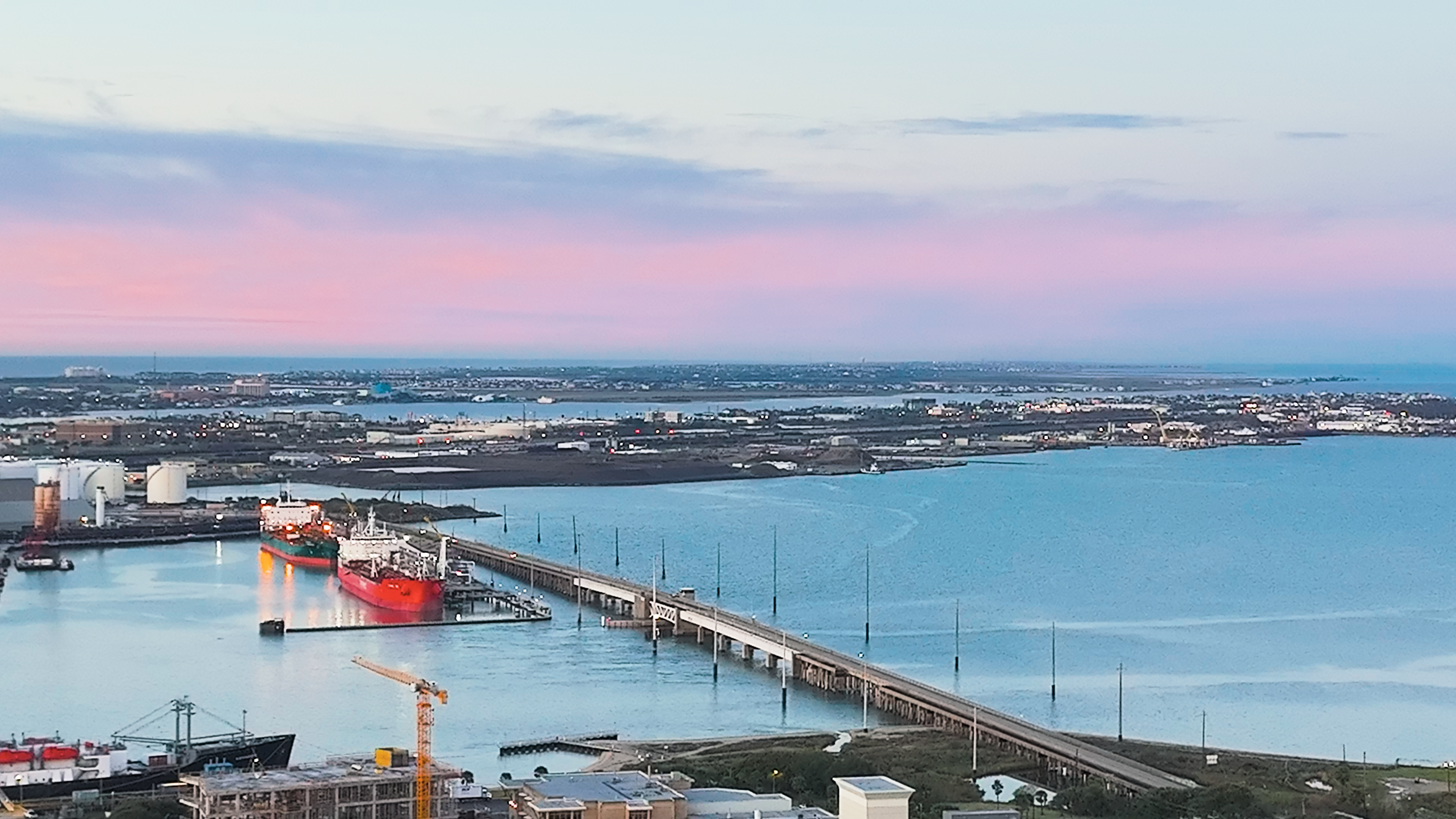
The design currently under development would construct an elevated bridge approximately 73 feet above the navigation channel, curving around the Texas A&M Galveston campus and allowing maritime traffic to pass beneath it.
The new bridge would be constructed adjacent to the existing bridge, allowing the current crossing to remain open during construction.
Once the new bridge is completed, the existing structure would be demolished.
The project’s cost has increased significantly over time.
Early estimates placed the project near $100 million.
Current projections exceed $350 million.
Despite the rising cost, the project has continued advancing through federal environmental review and engineering design.
Federal Funding Could Dramatically Change the Equation
One reason some stakeholders have expressed interest in evaluating the land bridge concept involves potential federal funding opportunities.
If a project ultimately advances through the Army Corps process, federal participation could potentially cover up to 75 percent of the construction cost, depending on the type of infrastructure approved.
Such participation could significantly reduce the financial burden on state and local partners and narrow the current funding gap associated with the bridge replacement project.
However, the feasibility study itself must be funded by the sponsoring entity.
Officials estimate the Section 203 feasibility study required to evaluate the land bridge could cost between $4 million and $5 million, funding that would need to come from the sponsor rather than federal or state sources.
Congressional Attention
Discussion of the Pelican Island crossing gained additional momentum earlier this week when Congressman Randy Weber convened regional stakeholders to discuss the future of the bridge project and possible alternatives.
The meeting brought together local officials, maritime leaders, and infrastructure experts to examine long-term options for the connection between Galveston Island and Pelican Island.
The crossing represents the only roadway connection between the islands, making it one of the most critical transportation links in the harbor.
The Land Bridge Concept
The alternative now being discussed is commonly referred to as a “land bridge.”
Rather than constructing a tall elevated bridge over the navigation channel, the proposal would create a “land bridge” — a solid land crossing connecting Galveston Island and Pelican Island.
Supporters say the concept could potentially reduce long-term infrastructure costs while offering new transportation possibilities for the island’s growing industrial base.
Some maritime stakeholders have also suggested the concept could reduce long-term dredging requirements in portions of the harbor.
Preliminary estimates discussed locally suggest potential savings of roughly $30 million in dredging costs, though those figures would ultimately need to be confirmed through formal engineering analysis.
Among the advantages cited by proponents:
- potentially lower long-term maintenance costs
• possible changes to dredging requirements
• expanded industrial transportation options
• the potential integration of rail infrastructure connecting Pelican Island to regional freight networks
But those questions can only be answered through a formal engineering review.
Navigation Questions: How Ships Would Pass
One of the most immediate engineering questions surrounding the land bridge concept is how maritime traffic would move through the harbor if a causeway-style crossing replaced the elevated bridge design.
The existing TxDOT plan allows ships traveling between the Galveston Ship Channel and the Intracoastal Waterway to pass beneath the bridge.
A land bridge approach would require a different solution.
Possible options could include rerouting portions of the navigation channel, incorporating movable bridge structures, or altering vessel access routes within the harbor, though none of those possibilities have yet been formally evaluated.
Determining how maritime navigation would function under a land bridge design would be one of the central issues addressed during any federal feasibility study conducted by the Army Corps of Engineers.
Environmental Review Would Be a Major Factor
Environmental considerations would also play a central role in determining whether a land bridge could move forward.
Projects that alter waterways or create new land within coastal ecosystems typically require extensive environmental analysis addressing water flow, sediment movement, habitat impacts, and long-term ecological effects.
Under the federal feasibility process being discussed, those issues would be evaluated by the Army Corps of Engineers along with federal and state environmental regulators.
Whether the land bridge concept could meet those requirements is one of the key questions the feasibility study would be designed to answer.
The Rail Factor
One of the most discussed aspects of the land bridge concept involves the possibility of adding rail connectivity between Pelican Island and the mainland.
Rail access is a core component of most major industrial ports, allowing cargo and materials to move efficiently between ships, manufacturing facilities, and inland transportation networks.
If rail infrastructure were incorporated into Pelican Island’s connection to the mainland, it could significantly expand the types of maritime and industrial operations the harbor can support—including shipbuilding, offshore energy services, and logistics operations tied to Gulf Coast trade.
As Pelican Island continues evolving into a maritime and industrial hub, that level of connectivity could strengthen the long-term competitiveness of the Port of Galveston.
One question raised during recent discussions is whether, if a land bridge were to block vessel access through the western portion of the channel, it might create the possibility of modifying the existing bridge design to incorporate rail access by lowering the structure.
However, that idea remains speculative. Any such modification would require extensive engineering analysis and approval from the Texas Department of Transportation (TxDOT), the U.S. Coast Guard, and other regulatory authorities, and has not been formally proposed as part of the current bridge project.
What Happens Next
The next step will come when the Port of Galveston Wharves Board meets on Tuesday, March 10, 2026, to consider whether the Port should request federal authorization to undertake the feasibility study.
Board materials indicate trustees will discuss whether to authorize the Port Director to pursue the Section 203 feasibility process with the U.S. Army Corps of Engineers. The discussion may also include presentations or comments from interested stakeholders and parties advocating for evaluation of the land bridge concept.
If the board ultimately decides not to pursue sponsorship, another regional entity could potentially initiate the process.
If the study does move forward, it would launch a detailed federal evaluation examining:
• engineering feasibility
• environmental impacts
• navigation effects
• long-term economic benefits
• potential transportation improvements
Such studies typically take one to two years to complete.
During that time, the existing bridge replacement project led by TxDOT would continue advancing through its own development timeline.
A Decision That Could Shape the Harbor for Generations
Pelican Island is rapidly emerging as one of the most strategically important maritime and industrial locations on the Texas Gulf Coast.
In addition to the Davie Defense shipbuilding expansion, the island continues to see growth tied to maritime research, logistics, and port infrastructure.
The crossing between Galveston Island and Pelican Island is the gateway to all of it.
Whether that connection ultimately remains a traditional bridge—or evolves into a different form of infrastructure—could shape the economic future of the harbor for decades to come.
For now, the question facing local leaders is simply whether the idea should be studied.
The answer to that question may come soon.
A Defining Infrastructure Decision
Whether the concept ultimately moves forward or not, the discussion itself highlights how rapidly the stakes surrounding Pelican Island have changed.
What was once viewed primarily as a local transportation project is increasingly tied to far larger questions about the future of maritime infrastructure, shipbuilding capacity, industrial logistics, and economic development along the Gulf Coast. With major investments in shipbuilding, port infrastructure, and maritime research now converging on Pelican Island, the crossing between Galveston Island and Pelican Island has taken on new strategic importance.
The decision about how that connection is ultimately built—whether through the current bridge plan, a modified design, or a different approach altogether—will help shape the economic trajectory of the region for decades.
For Galveston and the broader Gulf Coast maritime economy, few infrastructure questions carry more long-term consequence.
We will be updating this story as it develops.

David Landriault
Founder of The 1839
David is the co-founder (alongside his brilliant, infinitely patient wife Christy) of The 1839 and Falcontail Marketing & Design — two ventures built on storytelling, strategy, and a deep love for community.
At Falcontail, David has quietly helped shape the marketing presence of organizations ranging from Stanford University to local legends like Sunflower Bakery & Café. He’s known for turning big, messy ideas into sharp, strategic campaigns — the kind that move people, not just pixels.
He’s been called a creative powerhouse, a strategic Swiss Army knife, and the guy who always ‘has a guy’ for everything. But despite his track record, David avoids the spotlight, preferring to elevate others, solve impossible problems, and deliver dad jokes with unnerving confidence. His work is serious. He just refuses to take himself too seriously.

Craig Brown
Proud 39er
Mayor Craig Brown brings decades of public service and deep civic experience to The 1839’s Civics column. A retired pediatric dentist and Galveston resident since 1997, Craig has served the city as a council member, planning commission chair, and now mayor since 2020. His leadership has focused on flood control, infrastructure, historic preservation, and strengthening local partnerships.
Craig offers readers an inside look at how local government works — from city projects and planning to coastal resilience and tourism strategy. With a practical, people-first approach, he breaks down big issues into stories that connect residents with the policies shaping Galveston's future.

Join the Conversation
Galveston Pictures and Videos
Get Involved with The 1839
Sign Up for Our Newsletter