
Editorial by David Landriault
$21.8M grant to Davie Defense for Galveston Shipbuilding Brings 2,400 Jobs and $730 Million Investment to the Texas Gulf Coast
One of the largest industrial investments in recent Galveston history is now underway.
On February 11, Texas Governor Greg Abbott announced that Davie Defense Inc. will expand shipbuilding operations in Galveston and Port Arthur, launching a $730 million investment expected to create more than 2,400 jobs. The project marks one of the largest industrial expansions on the Texas Gulf Coast in recent years and signals a renewed national focus on American maritime manufacturing.
Key Facts
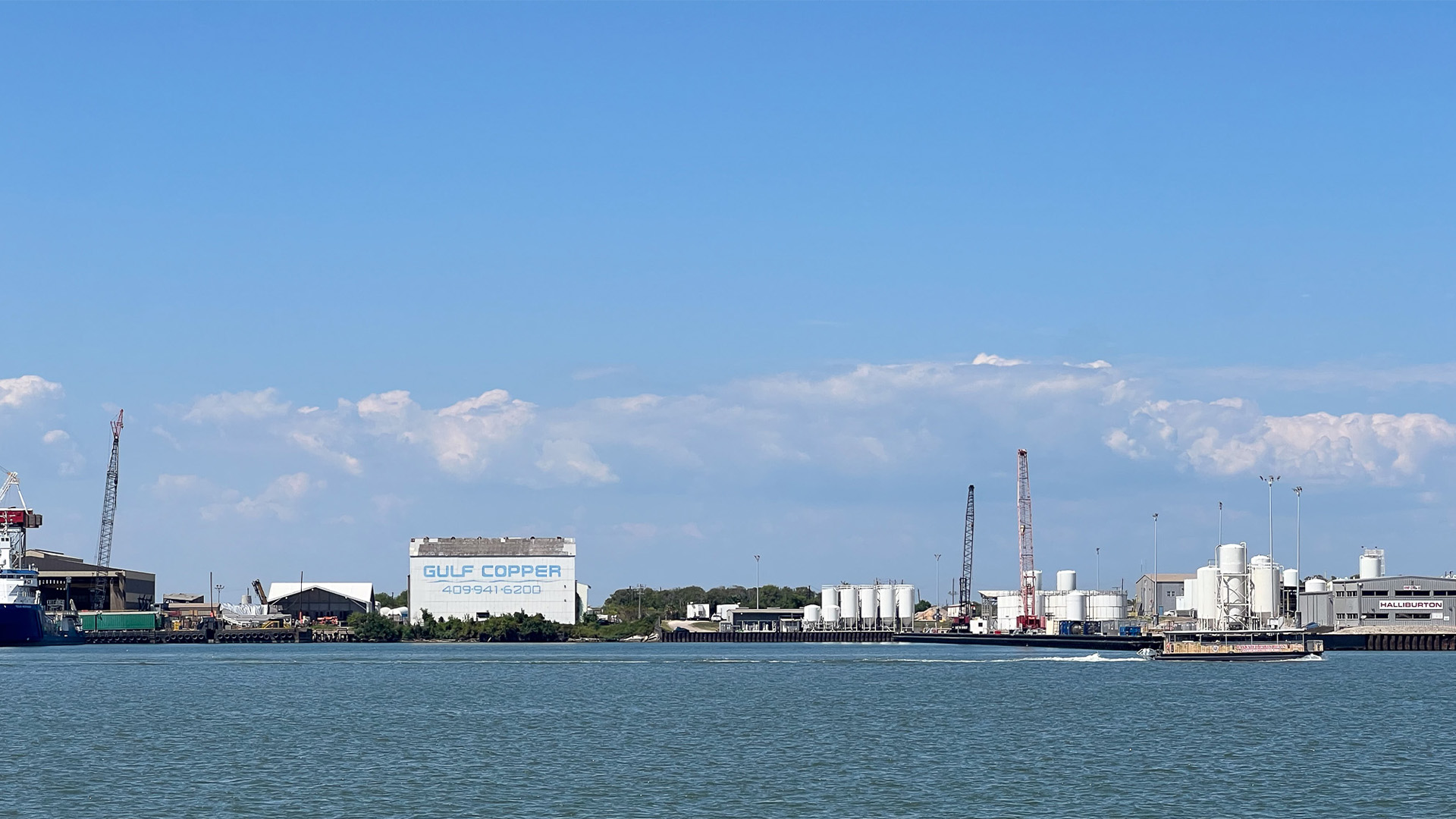
Galveston has crossed a threshold few cities ever reach: we’re no longer talking about economic transformation as a distant goal—we’re experiencing it in real time. First came Davie’s $1 billion plan to turn Galveston and Port Arthur into a southern anchor for North American shipbuilding, tied directly to the Coast Guard’s next-generation icebreakers. Then, with barely time to catch a breath, Gulf Copper secured a multi-year agreement to fabricate outfitted structural modules for the Navy’s Flight III Arleigh Burke–class destroyers.
These aren’t symbolic wins. They’re foundational shifts—high-skill jobs, deep-water infrastructure, and next-generation manufacturing capacity returning to a waterfront that once shaped American maritime history. Together, these announcements position Galveston as one of the fastest-rising shipbuilding hubs on the Gulf Coast, and a genuine player in the nation’s defense industrial base.
~ David Landraiult
An 1839 Editorial: February 11, 2026
Breaking News: $21.7M Grant to Davie Defense Helps Bring Major Shipbuilding Expansion to Galveston
A major shipbuilding expansion along the Texas Gulf Coast positions Galveston as a central player in the revitalization of American maritime manufacturing.
Governor Abbott announced on Feb 11 that Davie Defense Inc. will expand its shipbuilding capacity in Galveston and Port Arthur to construct Arctic icebreakers and other specialized vessels.
The expansion is expected to create more than 2,400 new jobs and represents over $730 million in capital investment across the two Gulf Coast communities. The State of Texas has extended a $21,771,000 Texas Enterprise Fund (TEF) grant to support the project.
What This Means for Galveston
For Galveston, the announcement signals more than job creation. It places the island at the center of a broader national effort to restore American shipbuilding capacity. Mayor Craig Brown called the investment “vital to our economic growth,” noting its implications not only for the city but for the nation’s security and industrial future.
Galveston’s assets—its deep-water port, maritime workforce, and industrial infrastructure—positioned it as a strategic site for expansion. According to local leaders, state-level support through the Texas Enterprise Fund helped secure the project amid interstate competition.
Joshua Owens, Executive Director of the Galveston Economic Development Partnership, described the investment as a catalyst: one that could attract additional defense and maritime manufacturers to the Texas Gulf Coast.
If realized at full scale, the expansion would represent one of the most significant industrial investments in Galveston in recent years.
A Strategic National Investment
Davie Defense CEO Kai Skvarla framed the project as part of a larger industrial strategy.
The company intends to make its Texas operations a cornerstone in the revitalization of the American shipbuilding industry, with a focus on polar-capable Arctic icebreakers—vessels critical to U.S. national security and Arctic operations.
The United States currently operates a limited fleet of heavy icebreakers. Expanding domestic capacity to build these highly specialized vessels is widely viewed as strategically important for defense readiness and commercial maritime strength.
Governor Abbott emphasized that Texas aims to become a “national hub for critical shipbuilding,” pointing to the state’s workforce and pro-business environment as competitive advantages.
Regional Impact: Port Arthur and Jefferson County
While Galveston stands to benefit substantially, Port Arthur will also play a major role in the expansion.
Port Arthur Mayor Charlotte M. Moses described the award as “a strong vote of confidence in our community’s workforce and resilience.”
Jefferson County Judge Jeff Branick highlighted workforce training partnerships, including collaboration with Lamar State College to prepare ship fitters and other skilled trades.
The dual-site approach suggests a coordinated Gulf Coast manufacturing corridor rather than a single-site expansion.
Understanding the Texas Enterprise Fund
The Texas Enterprise Fund is a performance-based grant program used to attract large-scale business relocations and expansions when Texas competes with out-of-state sites. Funds are awarded only when companies commit to specific job creation and capital investment benchmarks. In this case, the $21.7 million incentive supports a project bringing more than 2,400 jobs and over $730 million in private investment.
For perspective:
- Capital Investment: $730+ million
- State Incentive: $21.7 million
- Job Creation: 2,400+ new positions
The ratio underscores the scale of private-sector commitment relative to public incentive support.
Workforce and Economic Implications
The projected 2,400 jobs will likely span:
- Skilled shipbuilding trades
- Engineering and technical roles
- Manufacturing operations
- Supply chain and logistics
- Administrative and management positions
The multiplier effect—secondary jobs created through suppliers, service providers, housing, and local spending—could significantly extend the economic impact throughout Galveston County.
For a coastal city long shaped by tourism, hospitality, and energy sectors, the addition of large-scale advanced manufacturing further diversifies the local economy.
A Turning Point for the Gulf Coast?
This announcement aligns with broader conversations about American reindustrialization and national security preparedness.
If Davie Defense succeeds in making Texas a production hub for Arctic icebreakers and other specialized vessels, Galveston could emerge as a permanent anchor in a restructured domestic maritime industry.
The scale of the commitment—financial, industrial, and strategic—suggests this is not a short-term project, but a multi-decade positioning effort.
For Galveston, the question is not only how many jobs will be created, but how the island prepares:
- Workforce training pipelines
- Housing capacity
- Infrastructure readiness
- Long-term port planning
The answers to those questions will determine whether this moment becomes a headline—or a historic inflection point.
Davie Defense’s expansion places Galveston at the intersection of economic growth and national security.
If executed as announced, it represents one of the most consequential industrial developments on the Texas Gulf Coast in recent memory.

David Landriault
Founder of The 1839
David is the co-founder (alongside his brilliant, infinitely patient wife Christy) of The 1839 and Falcontail Marketing & Design — two ventures built on storytelling, strategy, and a deep love for community.
At Falcontail, David has quietly helped shape the marketing presence of organizations ranging from Stanford University to local legends like Sunflower Bakery & Café. He’s known for turning big, messy ideas into sharp, strategic campaigns — the kind that move people, not just pixels.
He’s been called a creative powerhouse, a strategic Swiss Army knife, and the guy who always ‘has a guy’ for everything. But despite his track record, David avoids the spotlight, preferring to elevate others, solve impossible problems, and deliver dad jokes with unnerving confidence. His work is serious. He just refuses to take himself too seriously.

Join the Conversation
Galveston Pictures and Videos
Get Involved with The 1839
Sign Up for Our Newsletter