

Downtown Is Having a Moment. It Has Had Them Before.
The people who revived downtown before us did not share one plan or belong to one institution. They made their separate efforts reinforce one another. That is the opportunity—and the obligation—of this moment.
Downtown Galveston is having a moment. It has had them before.
Moments are easy to love. The sidewalks fill. The buildings photograph well. Money arrives, plans are unveiled, and suddenly everybody can see a future in a place that was there all along.
But I love downtown most in the hours when it is not performing.
I love the way it refuses to become one thing. Within a few blocks, Galveston can be a working port and a courthouse, a home and a stage, a place to make art and a place to make payroll. The opera house and the loading dock do not merely coexist. They explain each other.
You can see the city thinking out loud here. A repaired cornice meets a patched brick wall. A new idea moves into an old room. Someone who has lived on the island for six months falls into conversation with someone whose family stories occupy half the block.
Downtown is not scenery. It is a daily arrangement among people who may never meet, but whose choices continually shape one another.
At some point, if you keep saying you love a place, it is reasonable for the place to ask what you are willing to carry.
That happened to me this spring at an April MarMo community meeting.
I was born in Galveston and raised across the water in Texas City—close enough to think I knew the island, and far enough to spend a lifetime learning the difference between recognizing a place and knowing it. My wife, Christy, and I co-founded Falcontail Marketing & Design and created The 1839. Communication is our work. Galveston is personal.
I went to MarMo because listening ought to come before communication—and because the place I kept saying I loved had begun to ask something of me.
I did not walk in intending to found an organization. I listened as residents and business owners described a pattern familiar to many Galvestonians: a concern is raised, a meeting is held, something is promised—and then the thread becomes hard to follow. Responsibility grows unclear. People closest to the problem cannot see what happened next. Trust thins a little more.
I stood and promised that Falcontail would build a free, one-page website. It would offer a way to sign up, see meetings and events, and find a list of businesses willing to make restrooms available to the public.
That was supposed to be it.
I have since been reminded that one page is a measure of design, not consequence.
Even a simple page requires honest answers. Which information is confirmed? Who keeps it current? What happens when circumstances change? Where does a private effort meet a public process? How does one useful conversation survive long enough to inform the next?
The deeper I followed that small promise, the clearer the larger gap became.
Downtown did not lack intelligence, concern or activity. It lacked a durable shared record connecting people closest to its problems with the institutions, processes and resources capable of moving them. Good work was happening, but often in separate rooms, on separate timetables, with no reliable way to see where one effort touched another.
The problem was not an empty room. It was what disappeared between the rooms.
That realization led me to found the Historic Downtown Galveston Alliance—not because downtown needed another claimant, but because no person or organization can claim the whole of it. HDGA began with a simple conviction: the pieces must be able to find one another.
That conviction also sets a boundary around the work. HDGA does not manage City or Port projects, replace the organizations already serving downtown, or claim to speak for everyone who cares about it. Where good work already has an owner, our first duty is to support it, not relabel it. Our role is to connect: bring people into the same conversation, keep confirmed facts separate from proposals and open questions, help useful work reach the people who can carry it, and report back.
One act gave the next act somewhere to begin.
What felt new to me in that meeting was, in another sense, an old Galveston lesson.
In 1966, early preservationists Jack and Sally Wallace saved the west portion of Hendley Row—the oldest commercial building on the Strand—from demolition and donated it to Galveston Historical Foundation.
From a distance, history often turns an act like that into the moment everything changed. We prefer stories with a single visionary because they are easier to remember—and because they ask less of the rest of us.
But Hendley Row did not save downtown.
It did something both smaller and more important: it gave the next act somewhere to begin.
The Wallaces’ gift became part of a much larger sequence. Galveston Historical Foundation and the National Park Service documented more than 500 historic structures, helping make the district’s significance legible. Support from the Moody Foundation and the Kempner Fund helped establish a revolving fund through which one rescued property could help finance another. Cynthia and George Mitchell invested in buildings others had stopped imagining as useful. The City established a local historic district. Galveston Historical Foundation and Galveston Arts restored The Grand. Dickens on the Strand and the return of Mardi Gras brought public life into streets that preservation alone could not animate. The record is one of accumulated effort, not solitary rescue.
No one owned that revival.
A survey could identify what mattered, but it could not repair a roof. Capital could rescue a building, but it could not create public affection for a district. A festival could fill a street, but it could not protect that street for the next generation. Public policy could establish boundaries, but it could not supply imagination.
Each effort was partial. Downtown returned because the parts began to reinforce one another.
That distinction matters now.
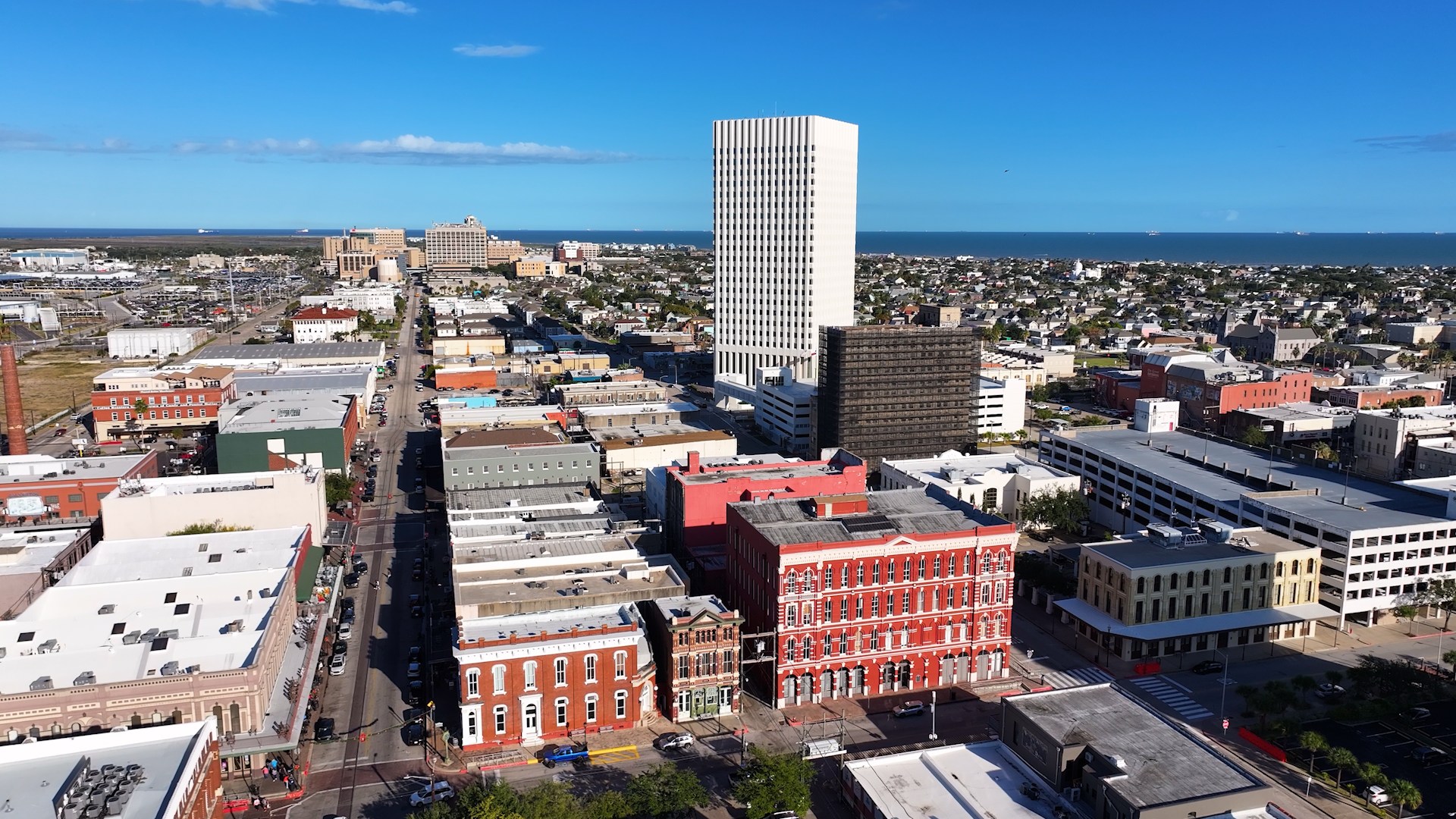
A $156 million fourth cruise terminal has opened at downtown’s doorstep. The City has secured a $24 million federal construction grant for downtown streets and sidewalks, with design and federal review underway. The Port has begun its first comprehensive mobility study, examining how the waterfront, downtown and nearby neighborhoods connect. Galveston is also undertaking its first comprehensive-plan update since 2011.
These are consequential developments. Arriving together, they create a rare decision window.
But simultaneous activity is not the same as shared direction.
It is entirely possible for every project to fulfill its own scope and for downtown to miss its future.
A person does not experience downtown as an organizational chart. They move from a terminal to a street, from a curb to a crossing, from a sidewalk to a building and back again after dark. In a matter of minutes, they have passed through several different responsibilities without seeing any of the lines.
They experience one place.
The institutions responsible for that place experience separate jurisdictions, properties, missions, budgets and timetables.
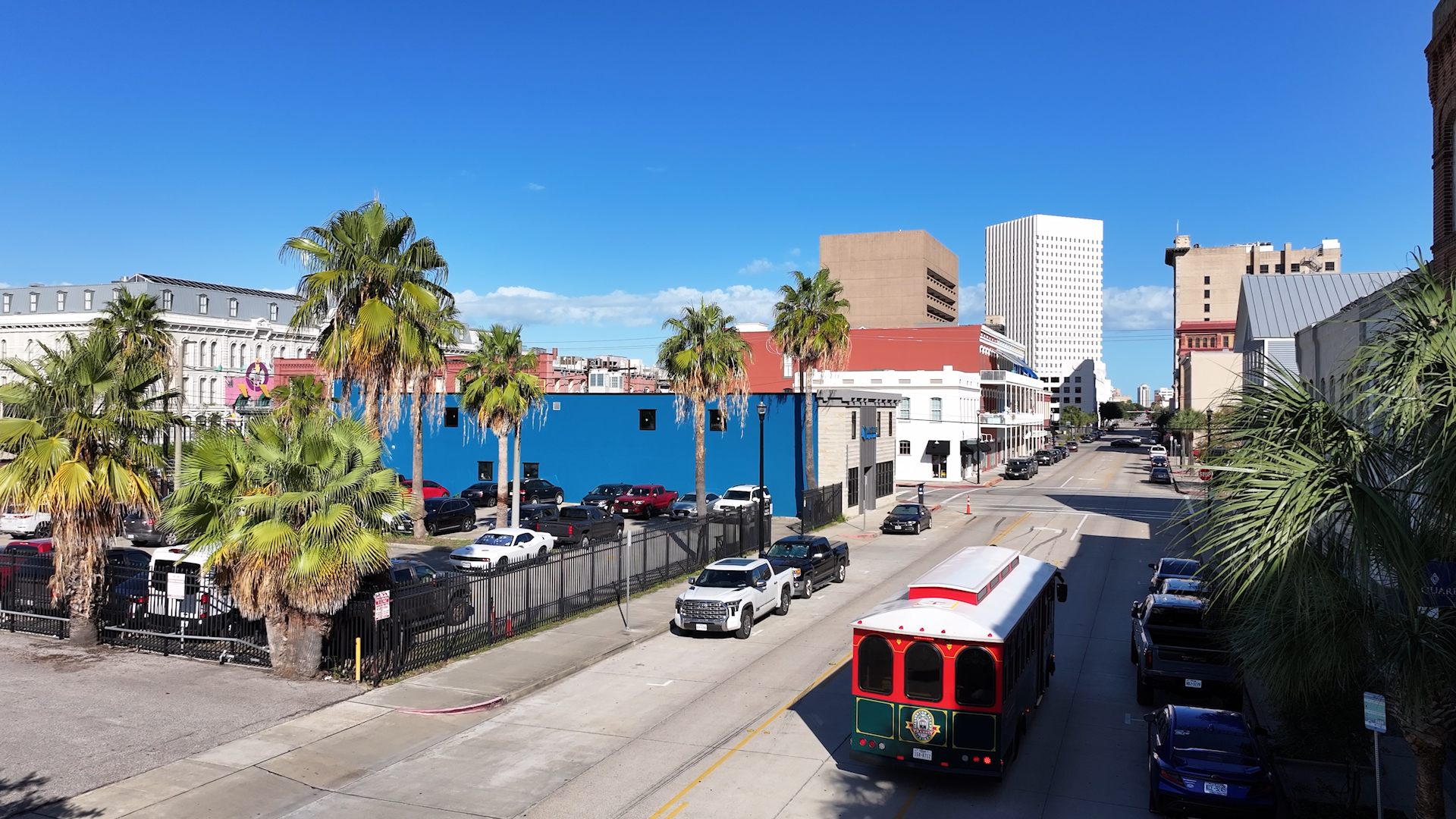
That is where downtown’s future will be decided: in the seams.
A well-designed sidewalk that ends at an unsafe crossing is not a complete success. A restored building cut off from the life around it is not a complete success. A system that moves people efficiently past downtown without inviting them into it may be functioning exactly as designed and still diminish the whole.
The danger is not that nobody is working.
The danger is that a great deal of good work can happen beside other good work without ever becoming one good place.
Cooperation is often reduced to a pleasant feeling—the civic equivalent of everybody standing close enough for the photograph. Real cooperation is more demanding.
It does not require people to erase their differences or institutions to abandon their duties. It requires each of us to understand that our definition of success lands in somebody else’s reality. It requires us to care whether the work still makes sense after it crosses the edge of our property, jurisdiction or assignment.
“Not ours” can be an accurate description of authority. It cannot be the end of the conversation about consequence.
A seam does not ask two pieces to become identical. It asks each piece to hold—and asks the joining to be sound.
That is the standard this moment deserves.
The City’s street project should be excellent on its own terms. So should the Port’s mobility work, the comprehensive plan, every restoration, every cultural investment and every private decision. But downtown’s next chapter will depend on more than the quality of its individual pieces. It will depend on whether each effort understands what touches it, what it changes for somebody else and what must continue beyond its own boundary.
We do not have to agree on everything. We do have to make the pieces add up to one place.
The earlier revival offers no simple recipe. Its circumstances were different, its progress was uneven and some of its lessons were expensive. But it left us a civic grammar worth remembering.
One act made another possible.
One rescued row gave preservationists evidence. Documentation gave investment confidence. Investment gave old buildings new use. Public protection gave private risk a longer horizon. Culture gave people a reason to return.
None was sufficient. Each became more powerful where it met the next.
The promise I made at MarMo was much smaller. It was only a website. But it carried the same obligation: do what you said you would do, make the result useful to someone beyond yourself, and leave the next person somewhere solid to begin.
The thing I offered was a page.
The thing I discovered was a responsibility.
That is what love of a place eventually becomes. Not possession. Not the right to speak for everyone in it. A willingness to take care of one piece without mistaking that piece for the whole.
Downtown Galveston is having a moment. Whether it becomes an era will not be decided by the size of any single investment, the eloquence of any single plan or the prominence of any single organization. It will be decided after the announcements, where one responsibility ends and another begins.
Sixty years from now, people may not remember which initiative carried which name. They will know whether the place held.
The future of downtown belongs to no single hand.
It will be made in the handoff.
Come as you are
An Invitation, Not Homework
On Tuesday, August 11, 2026, the Historic Downtown Galveston Alliance will hold a free, open community meeting from 5 to 6:30 p.m. at the Scottish Rite Cathedral, 2128 Church Street, followed by a mixer from 6:30 to 7. Mayor JP Listowski and District 3 Council Member Bob Brown will join us.
Updated August 5, 2026: the meeting has moved to the Scottish Rite Cathedral. It was originally announced for Rosenberg Library’s Wortham Auditorium. The date and times are unchanged.
This essay is an invitation, not homework. You do not need to have read it, agree with it or arrive carrying a finished solution. The meeting begins at the beginning: with the people in the room, the place we share and the work directly in front of us. Learn more about HDGA, see the meeting details and RSVP.
- Conversation
- 5–6:30 p.m.
- Mixer
- 6:30–7 p.m.
- Place
- Scottish Rite Cathedral
2128 Church Street