
Story
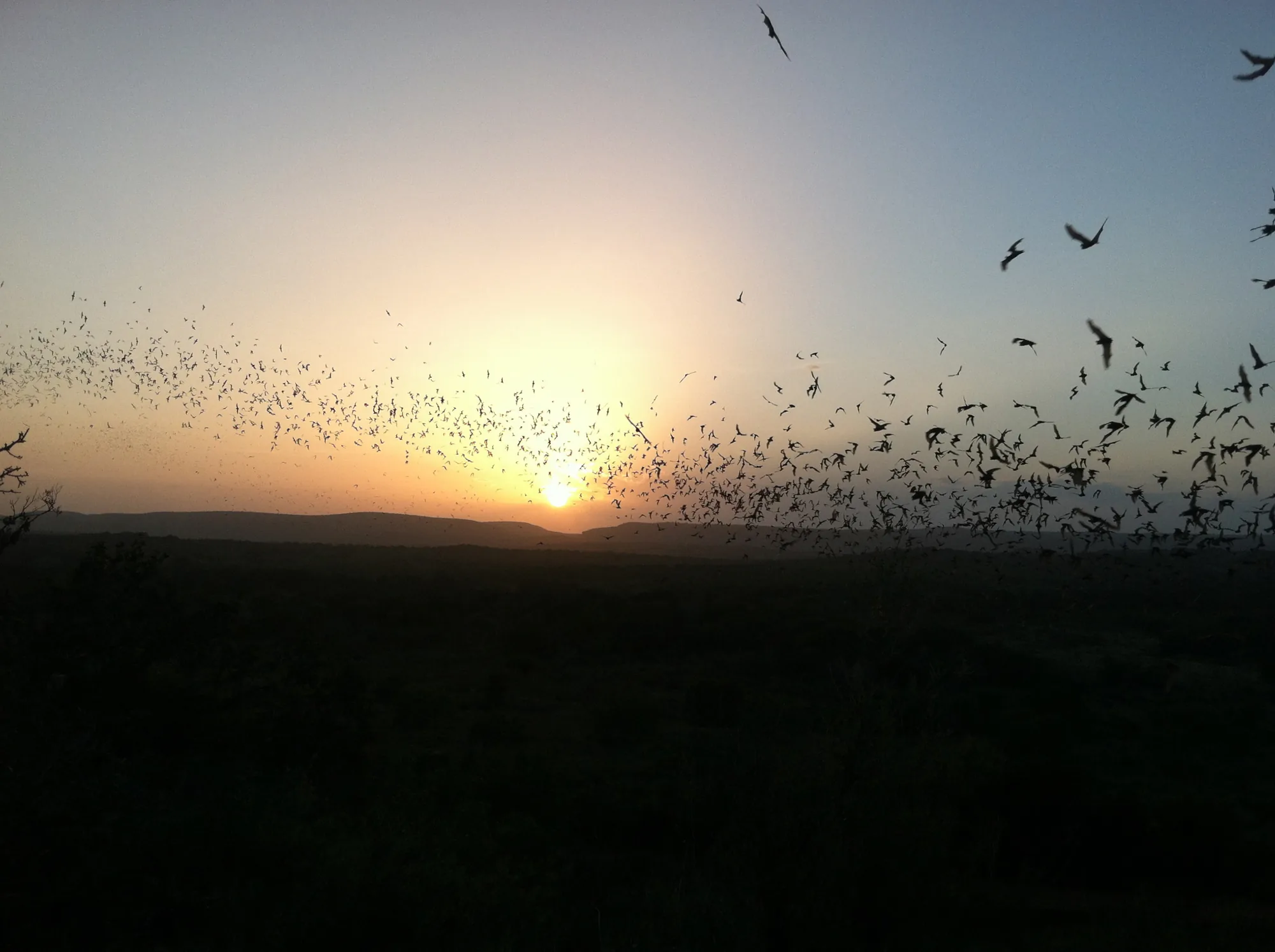
A big colony can clear 250 tons of insects before sunrise — roughly two blue whales’ worth of bugs.
Every summer evening, a Mexican free-tailed bat leaves her pup behind in the roost and takes to the sky over the island, hunting the mosquitoes that make your porch unbearable. This piece follows her through one night’s work and makes the case for leaving her — and her reputation — alone.
- Mexican free-tailed bats are Texas’s official state flying mammal and among the most common bats in the region.
- A single large colony can eat around 250 tons of insects in one night — roughly the weight of two blue whales.
- Bats aren’t blind; their echolocation is a precision tool layered on top of decent eyesight, not a workaround for poor vision.
- They’re unrelated to rodents and live far longer, often a decade or more, raising just one pup per season.
- Most bats are not rabid, but any direct contact deserves prompt medical or public-health guidance. Never handle a bat with bare hands; a bat on the ground, active by day or unable to fly should be left alone and reported to animal control.
- Mother bats can identify their own pup’s cry and scent among hundreds of nearly identical babies in the roost.
~ Christy Landriault
She has spent all summer eating the mosquitoes off your porch. The least we can do is not scream.
Just after sundown, in the blue hour when the heat finally lets go, she wakes hungry and leaves her baby behind.
It is not nothing, that leaving. Somewhere above her in the roost hangs a single pup no bigger than a pecan, born in June like all the rest, already crying for the milk only she can make. But a mother cannot feed anyone on an empty stomach. So she lets go of her perch and drops, falling into flight, wings grabbing at the dark. This is the part that looks like swooping. It is really just how a bat begins. Then she is up and gone, out over the island, hunting.
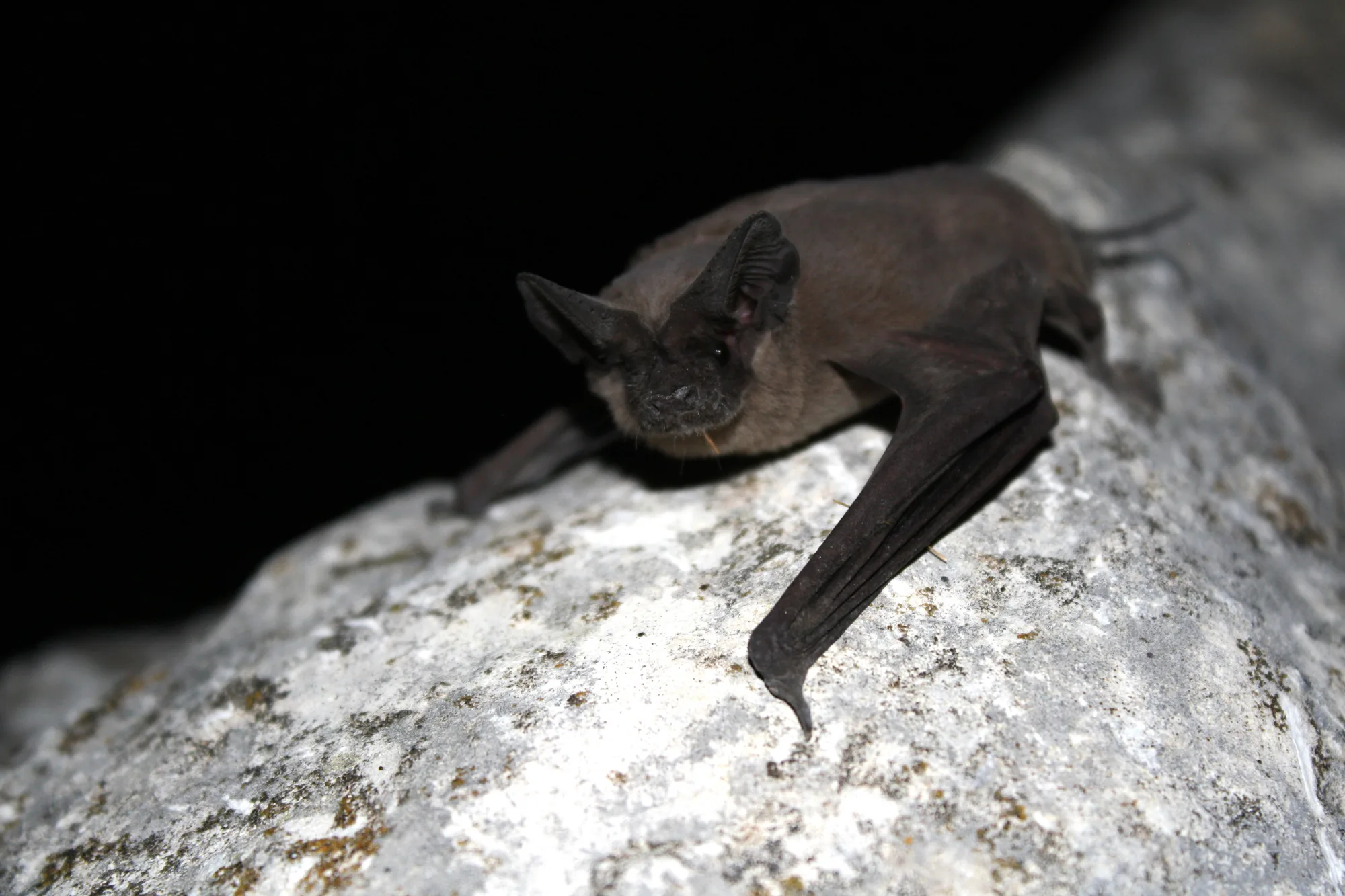
She is a Mexican free-tailed bat, which sounds exotic and is not. She is the most ordinary bat in Texas, common enough that the state named her kind its official flying mammal. And she knows this island better than most of the people sleeping beneath her: the warm lift off the seawall, the standing water behind the church, the yards where the ditches never quite drain. After a summer this wet, the whole place is one vast mosquito hatchery, and she works it like a woman with a mouth to feed at home, because she is.
The night comes to her as sound. She calls into the dark and the dark answers, and out of the echoes she builds the world: the fence post, the moth, the single mosquito lifting off the wet grass. She takes them one after another, a hundred, a thousand, more.
A big colony of her kind can clear around 250 tons of insects before sunrise, roughly two blue whales’ worth of bugs.
She is doing her share and then some, because back home there is that pecan-sized reason to hurry.
Your yard is on her route. That thin whine that finds your ankles the second you step outside? She wants it gone even more than you do. When she cuts low across the patio, she has no interest in your hair and even less in your blood. She is threading the air for the very insects that are biting you. For one strange moment, the two of you are on the same side.
Not that anyone thanks her for it. Every so often a porch light snaps on, a person she is actively helping comes undone at the sight of her, and somewhere down the block someone floats the idea of a shotgun. She has met this before. She is not offended. She does not have the time. There are mosquitoes, there is a baby, and the night is only so long.
Still, let us clear her name while she works.
She is not blind. “Blind as a bat” is a saying that survives entirely on charm, because bats see perfectly well, and some see better than we do; a few can even make out ultraviolet light. Her echolocation is not a crutch for bad eyes. It is a gift laid on top of good ones, sharp enough to pull a single mosquito out of a moonless sky. A hunter like that is not going to blunder into your bun.
She is not a rat with wings, either. Different animal entirely, and a far more patient liver of life. Where a rat is used up in a year or two, she may keep flying for a decade or more, raising that one pup a season, one small life at a time. It is why losing even a few of her kind lands so hard on a place. They do not bounce back the way pests do.
Rabies deserves a clear answer, not either panic or dismissal.
Most bats do not have rabies, but the consequences of missing an exposure are serious. A bat on the ground, active during the day, unable to fly or easy to approach may be ill. Never pick one up with bare hands. If a bat bites or scratches you, touches you directly, or is found in a room with someone who may not reliably know whether contact occurred, contact a medical professional or public-health department promptly for an exposure assessment. Healthy bats typically avoid people; let them keep doing the night work nobody pays them for.
And then, near morning, the thing she has been flying toward all night. She turns for home, back to the roost where hundreds of pups hang in the dark, packed close, nearly identical, every one of them crying for a mother of its own. Out of that whole wall of voices, she finds hers. Not one near hers. Hers. By the sound of it and the smell of it, in the dark, without a moment’s doubt, the way you would know your own child’s cry in a crowded room. She settles in beside it and feeds it at last, and the milk it drinks she made from a whole island’s worth of mosquitoes.
So think of her the next time one crosses your porch light. The only mammal on Earth that truly flies, quick as a small plane, out past midnight over your yard, and a devoted mother on top of it.
We spend a lot of words in these pages on what is going wrong for this island. She is one of the things going right.
Let her work. Say thank you if you like; she will not hear it over the mosquitoes. Then step inside, unbitten, and give the bat a break.
Christy Landriault co-founded both Falcontail and The 1839 with her husband, David, blending strategy with soul. A lifelong nature lover and fierce advocate for Galveston’s wild spaces, she brings heart, clarity, and creative depth to every project. Her work empowers small businesses to grow with purpose—always rooted in community, beauty, and truth. At The 1839, her vision helps shape stories that matter and a platform that uplifts the island she calls home.
Sources & References
- Texas Parks & Wildlife Department: Official State Symbols of Texas — state flying-mammal designation and Texas natural-history context.
- National Park Service: Bat Projects in Parks — insect consumption and ecological value of large Mexican free-tailed bat colonies.
- U.S. Geological Survey: Mexican free-tailed bat conservation and ecosystem services — pest-suppression value and conservation context.
- CDC: Preventing Rabies from Bats — signs of possible illness and what to do after potential contact.
- Animal Behaviour: Mother–young vocal recognition in Mexican free-tailed bats — evidence for mothers recognizing their pups’ calls in large colonies.
Galveston's stories continue.
Get the next one in your inbox →